




Lexum enhanced the accessibility of 1,500 decisions rendered by the Canadian Human Rights Tribunal (CHRT) by bringing them into compliance with the Standard on Web Accessibility and the Standard on Web Usability issued by the Government of Canada.
💡 Note
The Standard on Web Accessibility ensures that all online content is accessible to everyone, including people with visual, auditory, motor, or cognitive disabilities.
➢ Focusing on the technical and functional accessibility of information.
The Standard on Web Usability aims to make information clear, consistent, and easy to navigate for all users.
➢ Ensuring everyone can easily find what they are looking for.
Together, these two standards form the foundation of the Government of Canada’s inclusive user experience.
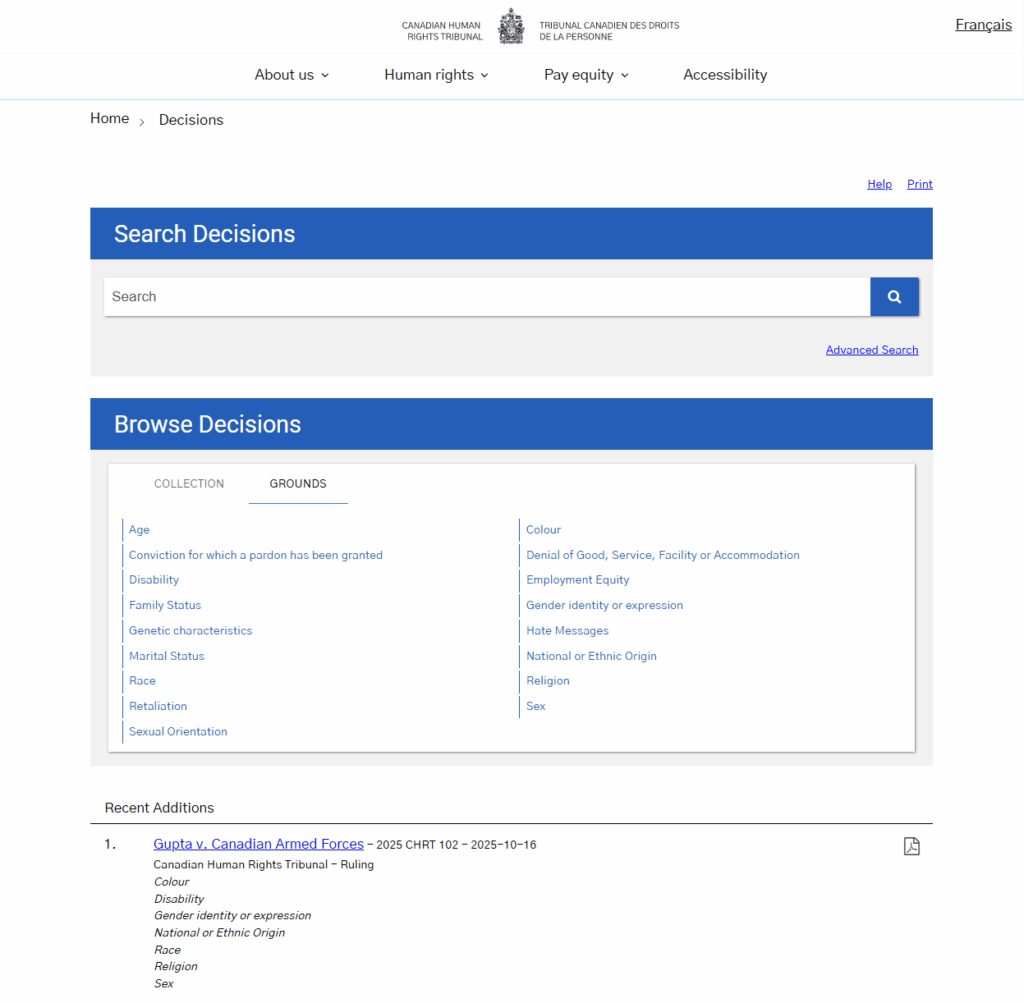
Search and browse page of the Canadian Human Rights Tribunal website. The modernized interface allows users to filter decisions by ground of discrimination and perform advanced searches, in compliance with the Government of Canada’s Web accessibility standards.
A Tribunal Committed to Digital Equality
The Canadian Human Rights Tribunal (CHRT) is an independent, quasi-judicial body established in 1977 under the Canadian Human Rights Act.
It adjudicates complaints of discrimination against institutions and businesses that fall under federal jurisdiction — including departments, Crown corporations, banks, and airlines.
Its bilingual decisions are an essential resource for promoting equity, inclusion, and the dissemination of Canadian human rights law.
💡 Note
The Canadian Human Rights Commission (CHRC) receives and investigates complaints.
The Canadian Human Rights Tribunal (CHRT) holds hearings and renders enforceable decisions.
Modernizing the Archives for Equitable Access
The decisions rendered by the CHRT between 1979 and 2010 required a full modernization to comply with the current Web accessibility and usability standards set by the Treasury Board of Canada Secretariat.
The Tribunal sought to de-archive approximately 750 bilingual decisions — representing a total of 1,500 files — and bring them into compliance with current standards.
A Rigorous Approach to Achieve Full Accessibility
To meet these requirements, Lexum implemented a structured five-step process: planning, extraction, accessibility enhancement, validation, and republication.
Each HTML file was individually processed to ensure full compliance with federal Web standards.
Once the adjustments were completed, the decisions were validated using the Treasury Board of Canada Secretariat’s analysis tools to ensure full compliance.
Practical Examples of Applying Both Standards
| Standard on Web Accessibility | Standard on Web Usability | |
| Structure | Use of H1, H2 tags, language attributes, and alternative text for images. | Logical sections and clear headings: Background, Findings, Decision. |
| Visual | WCAG 2.0 AA-compliant contrast; removal of non-readable decorative elements. | Consistent typography, clear layout, and readable formatting. |
| Navigation | Descriptive links, keyboard navigation, and ARIA labels. | Simple menus, breadcrumb trails (Home > Decisions > 2005 > Dupont v. Canada), and intuitive search tools. |
| Documents | Conversion of image-based PDFs into accessible HTML files. | Harmonized metadata (date, case number, parties). |
| Langage | Compatible with screen readers and translation tools. | Presentation optimized for clarity and accessibility — original decision content unchanged. |
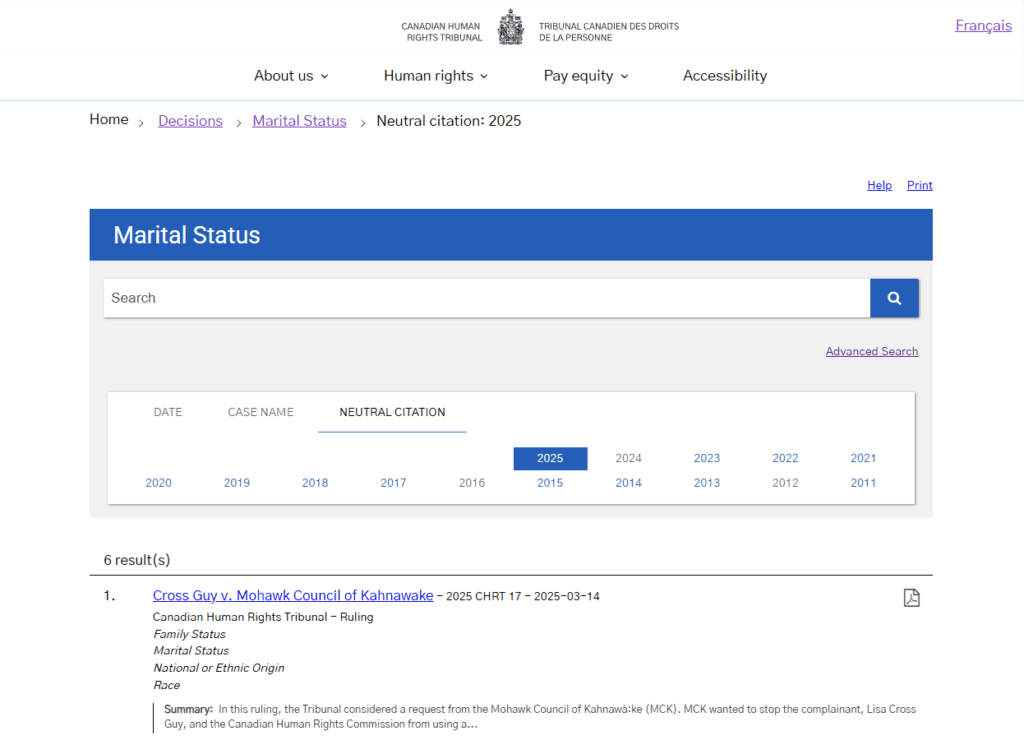
The modernized interface includes summaries for each decision, making the content easier to understand.
A More Inclusive Site for More Accessible Justice
By modernizing its decisions portal, the Canadian Human Rights Tribunal joins the majority of federal tribunals that use the Norma platform and stand out for their commitment to digital accessibility and transparency.
In partnership with Lexum, the Tribunal has strengthened its long-standing mission to promote inclusion and equal access to justice through technology.
Explore CHRT Decisions: