




The Administrative Tribunals Support Service of Canada (ATSSC) provides various administrative services to 11 federal administrative tribunals, including the management of their respective official websites. To support the online management and publication of all these tribunal decisions, the ATSSC relies on Norma, Lexum’s platform designed for the structured publication of legal information.
With Norma, the ATSSC benefits from a standardized infrastructure that can be adapted to the specific needs of each tribunal while ensuring modern, accessible and consistent publication of both current and archived decisions.
A Restructuring Opportunity for Harmonization
When the Government of Canada consolidated the support services of multiple administrative tribunals into a single organization, a key opportunity emerged: adopting a consistent and unified approach to decision publication.
Three of the tribunals were already using Norma, including the CIRB. Their experience made it easier for the ATSSC to adopt a shared system capable of:
- standardizing publication practices;
- reducing technological fragmentation and complexity;
- modernizing how decisions are accessed and searched.
Leveraging a Standard Platform While Respecting Diversity
Implementing a single platform across 11 tribunals required balancing common needs with institutional independence. Norma addressed challenges such as:
- varied publication practices across tribunals;
- heterogeneous document formats and templates (PDF, HTML, office documents);
- the requirement to meet WCAG 2.0 AA accessibility standards;
- the need to maintain editorial autonomy for each tribunal;
- varying volumes of historical decisions requiring standardization and integration.
Norma provides a flexible framework, capable of supporting the unique needs of each tribunal, within a common technological foundation.
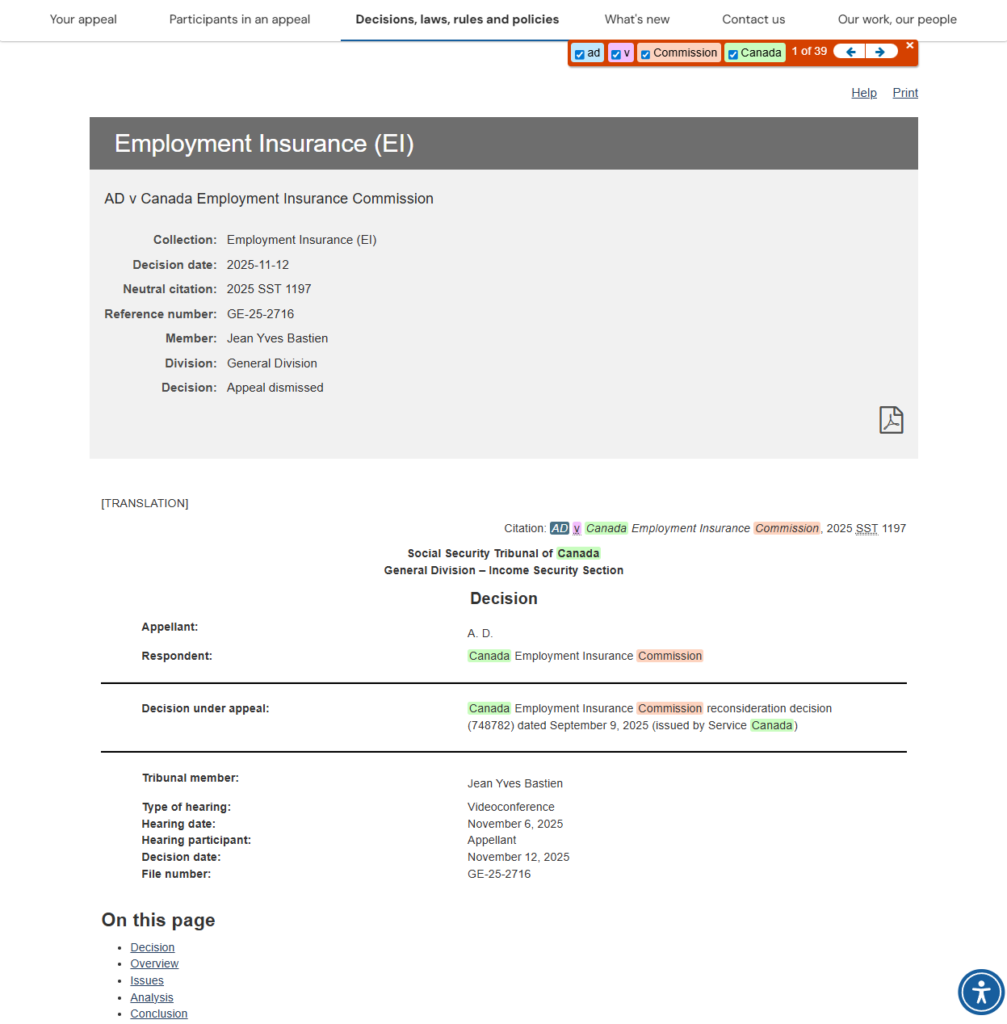
Decision page of the Social Security Tribunal of Canada (SST) in Norma, presenting a structured and accessible view of an Employment Insurance appeal, including key metadata, citation information, and the full decision content.
A unified, accessible, and scalable platform enabling the ATSSC to efficiently disseminate decisions from 11 tribunals while respecting their autonomy.
Norma as a Shared Technological Foundation
- A Centralized and Shared Web Platform
Norma offers the ATSSC a common infrastructure capable of hosting multiple distinct instances, while allowing each tribunal to retain full control over its content. Each institution can independently define and manage:
- the look and feel of its public interface;
- its case files and decisions;
- its publication rules and workflows.
This architecture ensures unified governance without compromising institutional autonomy.
2. Archive Integration
Lexum supports the ATSSC in integrating historical documents by:
- importing historical decisions;
- incorporating structured metadata;
- restructuring documents when needed to ensure consistent presentation within Norma.
3. WCAG Accessibility Built into Document Creation
Lexum implements, at the client level, document templates designed and defined by Lexum, enabling the native production of WCAG-compliant documents. These templates enforce proper structure, hierarchy, and semantic tagging from the moment documents are authored.
Norma’s WCAG filters then leverage the tags embedded in these templates to automatically generate the WCAG-required markup at publication time. This approach delivers the same accessibility outcomes while being more efficient, more consistent, and more sustainable.
The advantages of this method increase significantly as document volumes grow:
- reduced need for manual, post-publication remediation;
- greater long-term consistency in accessibility;
- better control over costs and timelines;
- seamless integration of accessibility into editorial workflows.
Rather than correcting documents after the fact, Lexum structures document production to ensure scalable, long-term WCAG compliance, making accessibility an integral part of the publishing process.
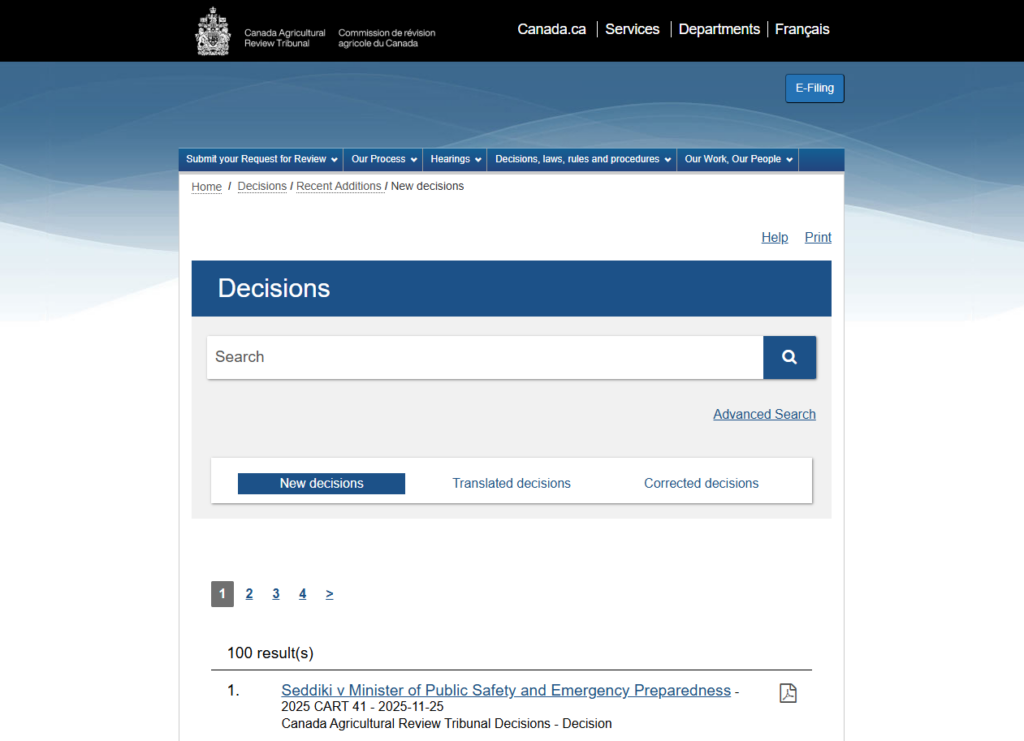
Interface of the Canada Agricultural Review Tribunal in Norma, illustrating how decisions are published using structured, bilingual document templates with accessibility built in at the source, enabling WCAG-compliant publication and a consistent, accessible experience for all users.
4. Turnkey Editorial Services
For some tribunals, Lexum manages key steps in the publication workflow, including:
- document preparation;
- consistent formatting;
- metadata extraction;
- publication in Norma.
This support enables tribunals to guarantee consistent and timely publication without overburdening internal teams.
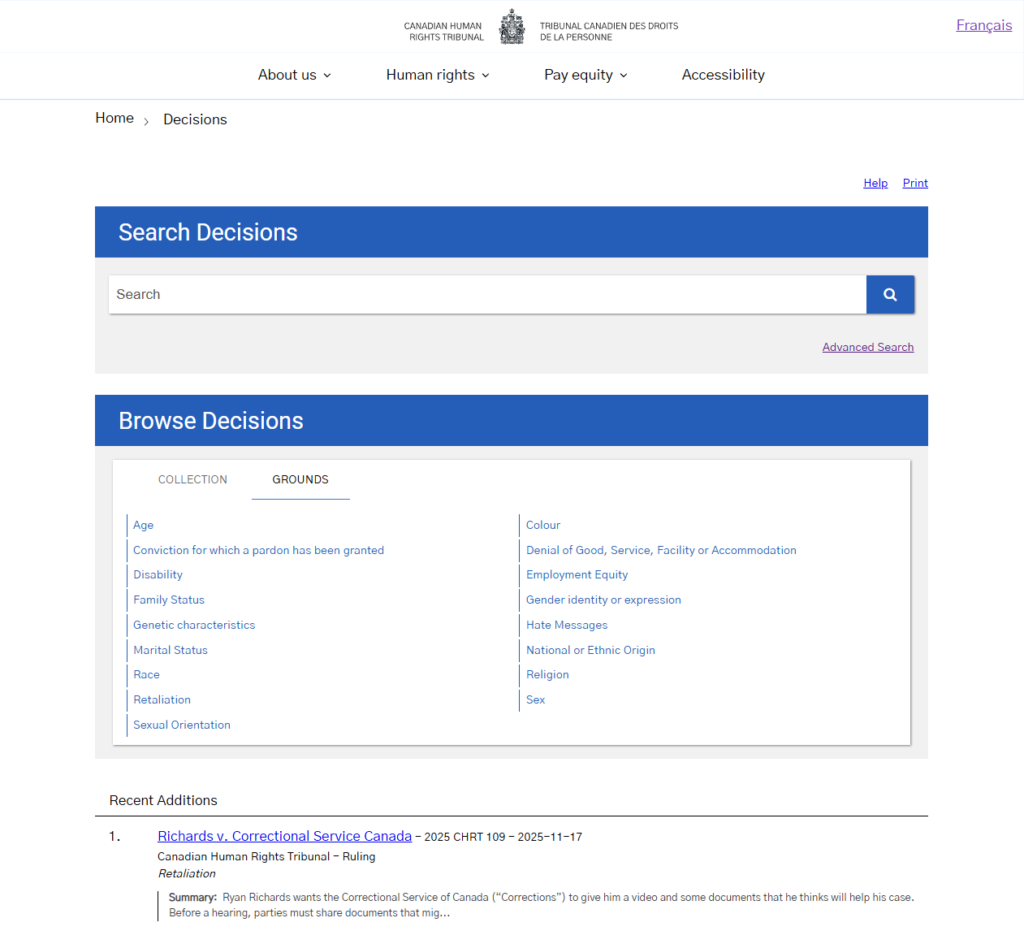
Canadian Human Rights Tribunal interface in Norma, illustrating how Lexum ensure consistent, well-structured and timely publication of decisions.
Progressive Deployment Across all Supported Tribunals
Norma’s rollout within the ATSSC was carried out gradually, ensuring smooth adoption across diverse institutions with varying operational needs.
1. Consolidation with Early Norma Adopters
Before the ATSSC was created, several tribunals were already using Norma to publish their decisions. These early deployments helped establish a strong foundation:
- the Canadian Human Rights Tribunal (CHRT),
- the Canada Industrial Relations Board (CIRB),
- the Canada Agricultural Review Tribunal (CART).
Their success demonstrated Norma’s ability to support tribunals with differing mandates.
2. Expansion to the Remaining Tribunals Supported by the ATSSC
Once Norma was consolidated with early adopters, other tribunals served by the ATSSC gradually integrated Norma:
- Public Servants Disclosure Protection Tribunal (PSDPT) ;
- Competition Tribunal (CT) ;
- Transportation Appeal Tribunal of Canada (TATC) ;
- Environmental Protection Tribunal of Canada (EPTC) ;
- Canadian Cultural Property Export Review Board (CCPERB) ;
- Federal Public Sector Labour Relations and Employment Board (FPSLREB) ;
- Canadian International Trade Tribunal (CITT) ;
- Specific Claims Tribunal (SCT) ;
- Social Security Tribunal of Canada (SST).
These successive integrations brought together, within a single platform, institutions with varying mandates, document structures, and publication volumes, while taking into account their specific operational needs.
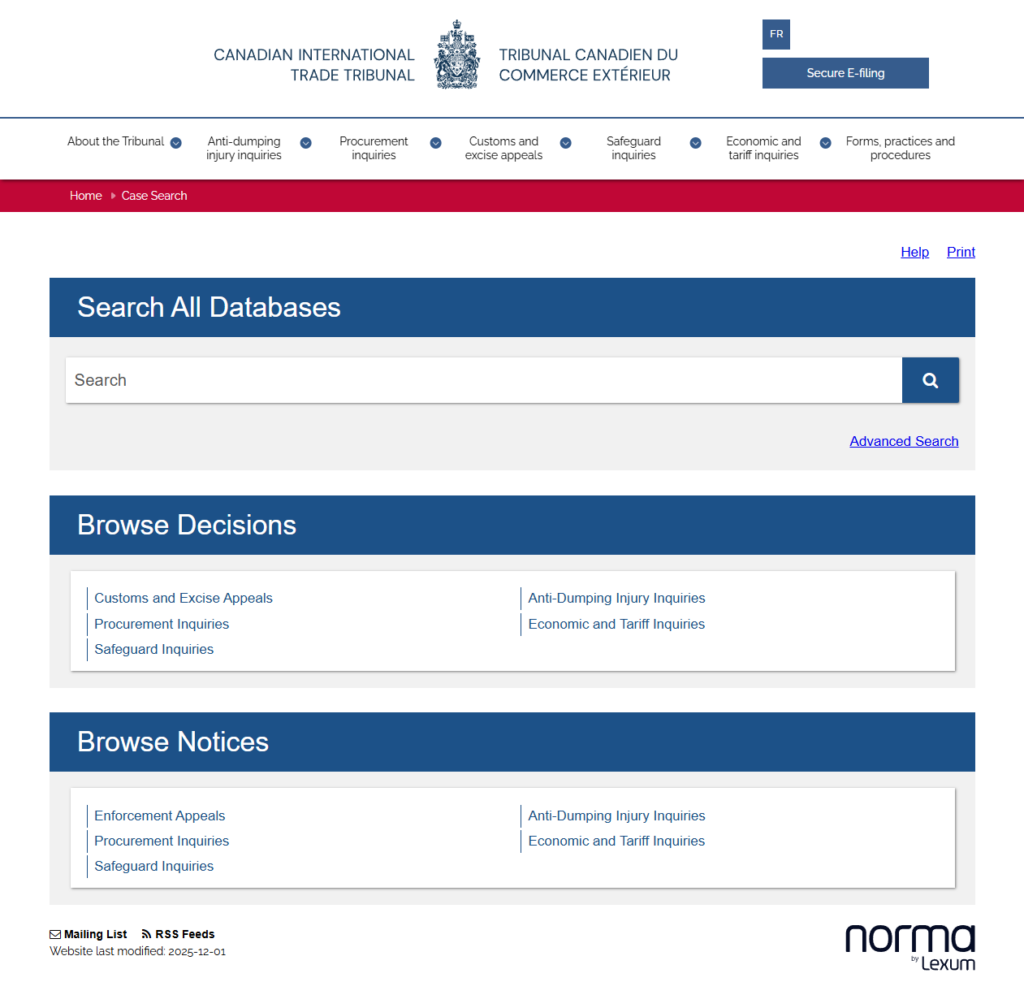
Interface of the Canadian International Trade Tribunal in Norma, illustrating the harmonization of archives through consistent categorization of decision types and full compliance with accessibility standards.
3. Adapting Templates and Features to Each Institution
Some tribunals require specific structures, such as:
- distinct case types;
- specialized navigation models;
- tailored content organization.
Lexum configured Norma accordingly, maintaining a coherent framework for the ATSSC and a seamless experience for end users.
4. Ongoing Improvements and Volume Management
Decision volumes naturally evolve over time. Norma enables the ATSSC to:
- scale publishing capacity based on real usage;
- support evolving institutional needs;
- maintain consistent and uninterrupted publication across all tribunals.
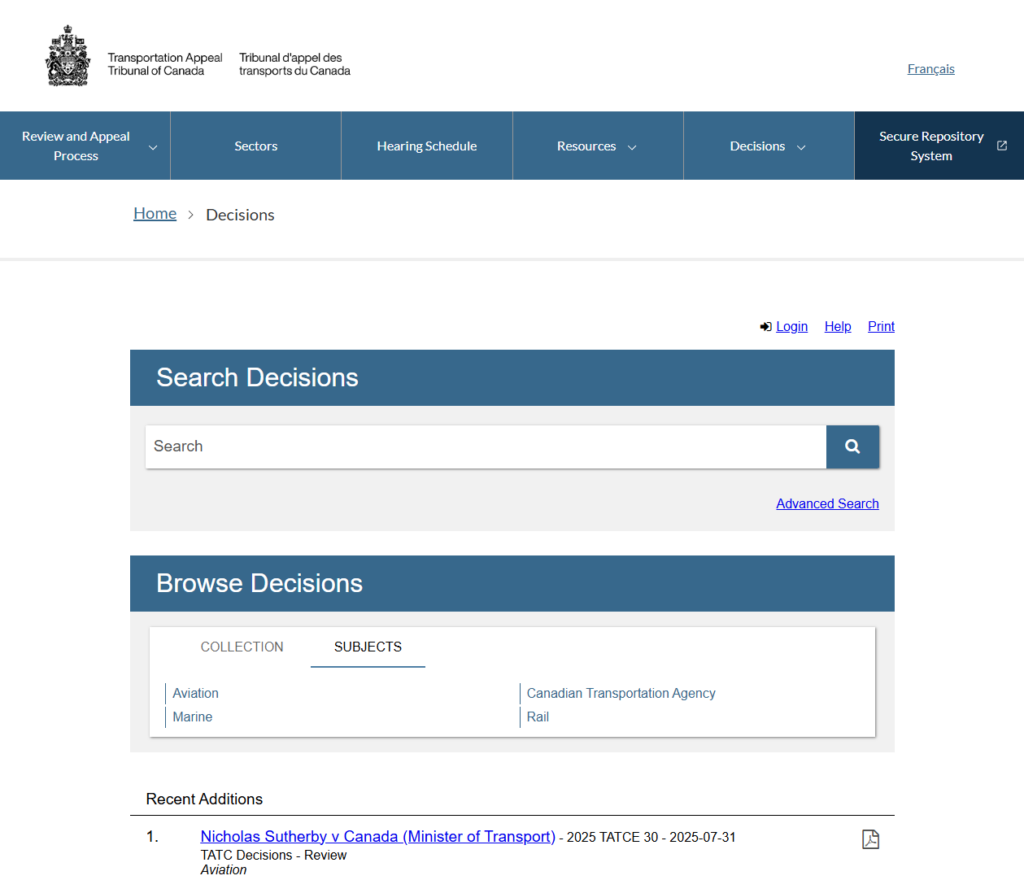
Interface of the Transportation Appeal Tribunal of Canada in Norma, highlighting how the platform adapts to distinct decision types through clear and consistent categorization.
Results and Benefits for the ATSSC and Its 11 Tribunals
- A unified platform for 11 tribunals
The ATSSC now operates within a centralized infrastructure for publishing decisions, while preserving the individuality of each institution.
- An improved user experience
End users benefit from efficient search tools and bilingual, structured, accessible decision documents.
- Greater operational efficiency
Norma reduces the number of systems to maintain, simplifies workflows, and enables the delegation of certain publication tasks when appropriate.
- A sustainable long-term solution
Norma supports the ATSSC’s mandate and evolves alongside the needs of its tribunals.
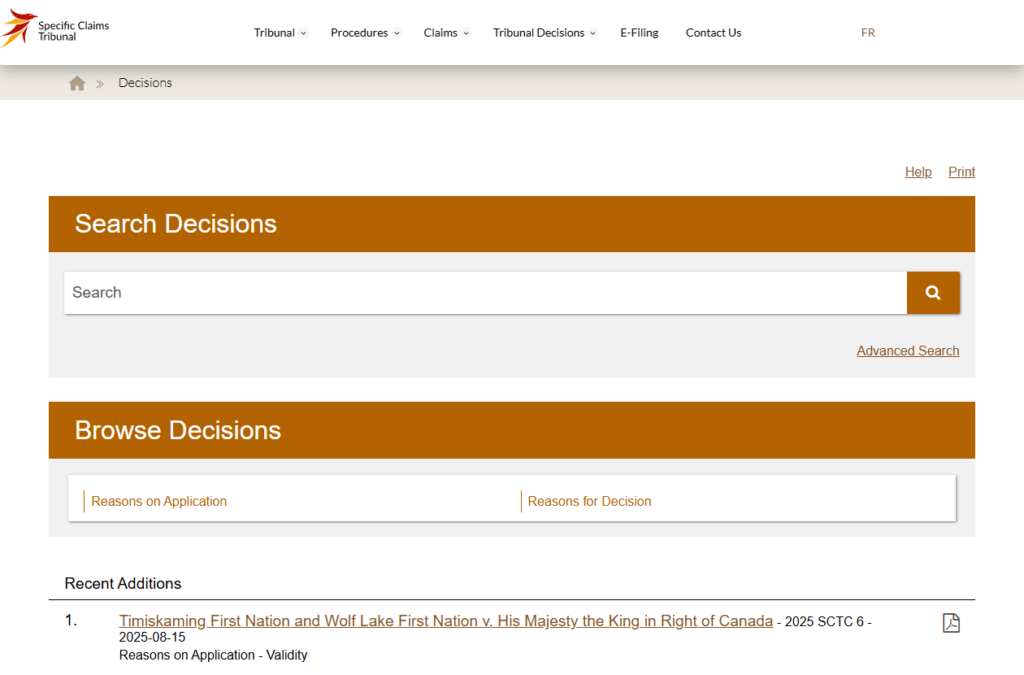
Interface of the Specific Claims Tribunal of Canada in Norma, illustrating how decisions are organized and accessed by type; such as Reasons on Application and Reasons for Decision.
Norma: the Platform that Brings Together 11 Canadian Federal Tribunals
Lexum has become the ATSSC’s trusted partner for the management, publication, and accessibility of decisions across 11 federal administrative tribunals.
With Norma, and thanks to a comprehensive range of specialized services (archive import, WCAG filters, turnkey editorial services, and template adaptation), the ATSSC benefits from a robust, harmonized, and scalable platform capable of meeting the diverse needs of its institutions.
This collaboration ensures modern, consistent, and accessible public access to Canadian federal administrative law, while respecting the autonomy and specificities of each tribunal.
Access decisions from supported tribunals:
Canada Agricultural Review Tribunal (CART)
Federal Public Sector Labour Relations and Employment Board (FPSLREB
Canada Industrial Relations Board (CIRB)
Canadian Human Rights Tribunal (CHRT)
Canadian International Trade Tribunal (CITT)
Transportation Appeal Tribunal of Canada (TATC)
Public Servants Disclosure Protection Tribunal (PSDPT)
Social Security Tribunal of Canada (SST)