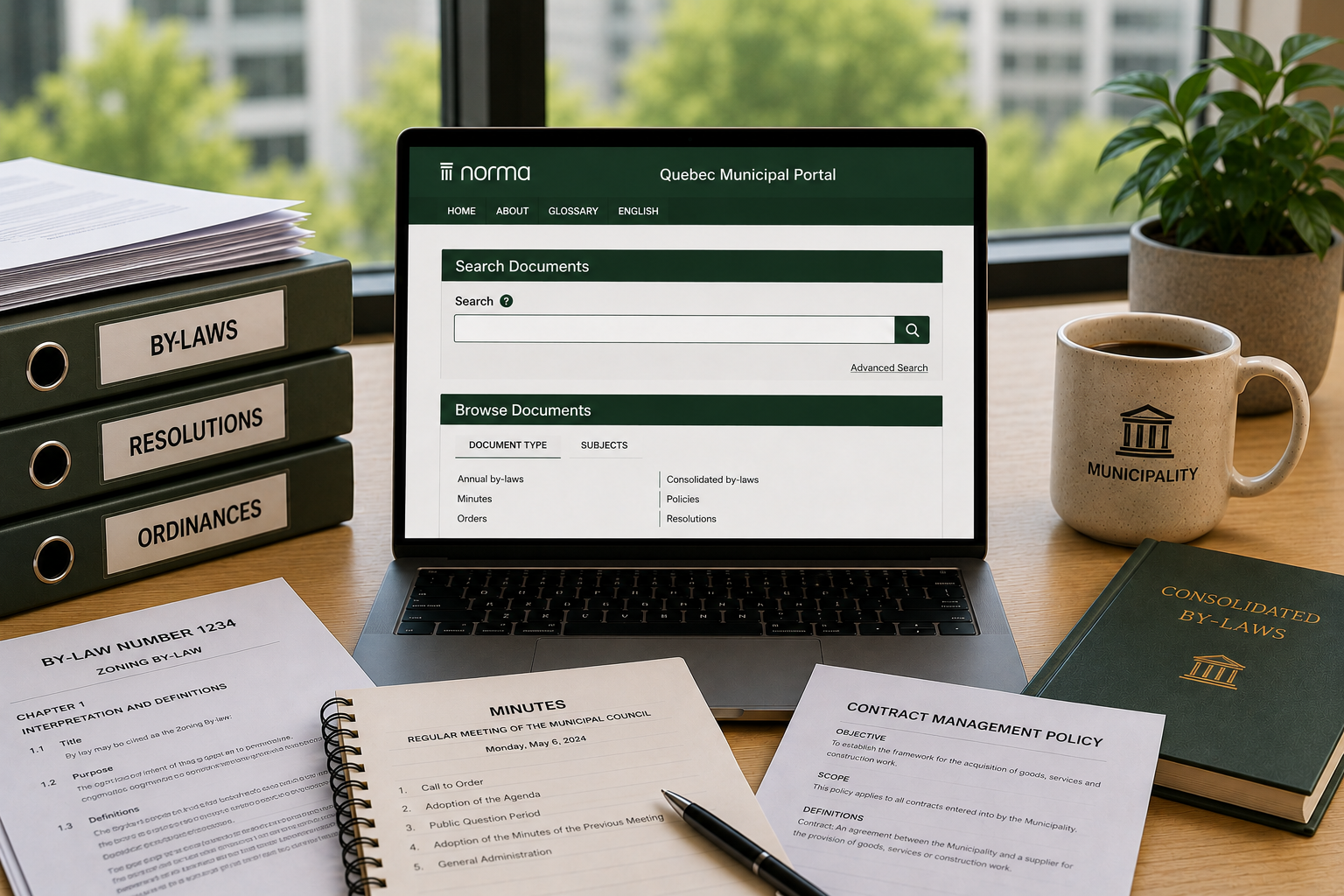




Lexum is pleased to share a recent infolaw article titled, “From Access to Understanding: Making Legal Information Usable in the Age of AI“. The article highlights Lexum’s work on how legal information can be made easier to use and understand in a digital environment.
It centers on a question that is increasingly shaping legal publishing: now that much of the law is online, what should come next?
Access is not the same as usability
Over the past twenty years, courts and legislatures have made major strides in making primary legal materials publicly available online. Case law, legislation and legal commentary can be searched and consulted.
But anyone who works with legal materials knows that open access is only part of the equation.
- A 60-page decision may be available online, but can a busy lawyer quickly determine whether it matters?
- Can a journalist understand its impact?
- Can a small business owner identify the current version of a regulation?
- Can a self-represented litigant find their way through interconnected authorities?
In other words, availability does not always mean clarity. The next chapter of digital legal publishing is about reducing this gap between access and use.
What Makes Legal Information Usable?
The infolaw article describes usability as a combination of practical features that help readers orient themselves and navigate legal materials more effectively:
But anyone who works with legal materials knows that open access is only part of the equation.
- Structure and consistency, such as reliable metadata, stable citations, and linking between related authorities
- Timeliness and currency, so users can trust that they are consulting up-to-date information
- Orientation and context, through tools that help users understand how a document fits within a broader legal framework, before committing to a full reading
For experienced legal researchers, navigating complexity is part of the work. For many other users, it can be a barrier. Usability aims to reduce unnecessary friction while preserving the integrity and nuance of the underlying texts.
AI as a Bridge : Assistance, Not Substitution
Artificial intelligence is accelerating efforts to improve usability. The article notes how Lexum uses AI-enabled tools to support tasks such as metadata extraction, citation detection, classification, and summary generation; helping materials become searchable and contextualized more quickly after release.
At the same time, the article stresses that AI is not a replacement for legal reasoning, editorial judgment, or institutional responsibility. When carefully integrated, it can support understanding by helping users identify relevance faster and navigate complex legal sources more intuitively.
A Broader Public Interest
Improving usability serves a far wider audience than legal professionals alone. For instance, clearer navigation and better contextual signals can support journalists reporting on legal developments, small businesses trying to understand regulatory obligations, students and researchers studying doctrine, and self-represented litigants seeking orientation in a difficult situation
From this perspective, the article frames meaningful access to legal information as a public value: it supports transparency, informed decision-making, and more equitable access to legal understanding.
Institutions and public infrastructure
Improving usability benefits more than legal professionals. Clearer navigation and beFinally, the article highlights that usability is not only a technical issue; it also depends on institutional choices. Courts, tribunals, and legislatures increasingly recognize that publication is part of their public mission, and that digital-first workflows can embed structure and context from the outset.
Examples from jurisdictions like New Mexico and Arkansas show how rethinking legal publishing as public infrastructure can reshape access at scale, through platforms such as Norma by Lexum.
The challenge today is no longer whether legal information can be put online, but whether it can be delivered in ways that are usable, understandable, and meaningful.
Read the full article in InfoLaw and join the broader discussion on what the next generation of legal publishing should look like.